Pentagon awards Pratt & Whitney $6.6 billion for F-35 engines
A contract award covers engines for two upcoming batches of F-35 Joint Strike Fighter production.
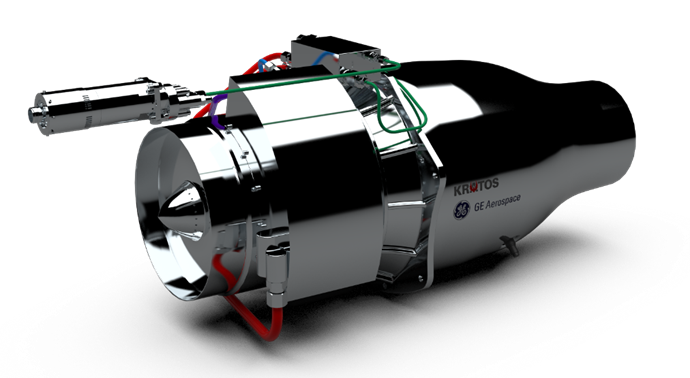
Beehive Industries, Honeywell, Pratt & Whitney and a teamup of GE Aerospace and Kratos will “mature engine designs” for future drone wingmen and other autonomous platforms, according to the Air Force.
Government can’t stop to update systems, so modernization has to happen without interruptions.
“This is certainly a growth market. It’s gonna take awhile to get there, but you could easily see hundreds of air vehicles built per year in this market sometime in the early 2030s,” Richard Aboulafia, managing director at AeroDynamic Advisory, told Breaking Defense.
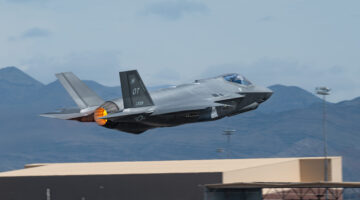
The $24.3 billion deal covers 148 aircraft each in production lots 18 and 19, closing out negotiations that have stretched since 2023.
The rising costs have led to a row between Switzerland and the US, as Bern faces a $610 million increase for its order of 36 F-35As, a defense official told Breaking Defense.
The long awaited F-35 modernization effort is delayed at least another two years since the congressional watchdog's last estimate, and a total of at least five years from its original timeline.
The Next Generation Adaptive Propulsion program is designing new engines that could power aircraft like the Air Force’s forthcoming F-47 stealth fighter.
“There was an impact, of course, with the four-week stoppage on our ability to ship all the GTFs and F135s that was in our plan,” RTX CEO Chris Calio told investors.
“We're going to do an F-55,” President Donald Trump announced today in Doha. “That'll be two engines and a super upgrade on the F-35.”
Breaking Defense Europe will launch May 4 with Tim Martin and Elisabeth Gosselin-Malo as co-editors.
Pratt & Whitney said in a statement that it has “contingency plans in place to maintain operations and meet our customer commitments” and has no “immediate” plans to resume negotiations with the union.
Boeing's selection to produce the Next Generation Air Dominance (NGAD) fighter is a game-changer for the company's challenged defense arm.
The company is examining “all offers that’re out on the market today to make that decision, so it’s not going to be a quick choice,” Lockheed’s F-35 program manager Chauncey McIntosh told Breaking Defense.
The two companies are facing off under the Next Generation Adaptive Propulsion program, which is developing a powerplant for an Air Force next-generation fighter — assuming one comes to pass.